
Signs your pocket door needs repair.
Pocket doors hide their hardware inside the wall, which means you can't see the problem. But you can definitely feel it. Here are the six symptoms we see most often across Treasure Coast homes.
Door Stuck in the Wall
You can't pull the door out of the pocket. Rollers have seized up or the track is bent, trapping the panel inside the cavity.
Door Won't Stay Closed
The latch won't catch or the door drifts back open. The strike is misaligned or the floor guide is worn down.
Grinding Noise When Sliding
Metal-on-metal scraping every time you move the door. Worn rollers or debris packed into the overhead track.
Door Wobbles Side to Side
The panel sways when you push it. Floor guides are worn out or the overhead track has come loose from the header.
Gap at Top or Bottom
Uneven space between the door and the frame. Rollers are worn unevenly or the track is sagging inside the pocket.
Hard to Pull Out of Pocket
The door moves but takes real effort to slide. Roller failure, a bent track, or something inside the cavity blocking the path.
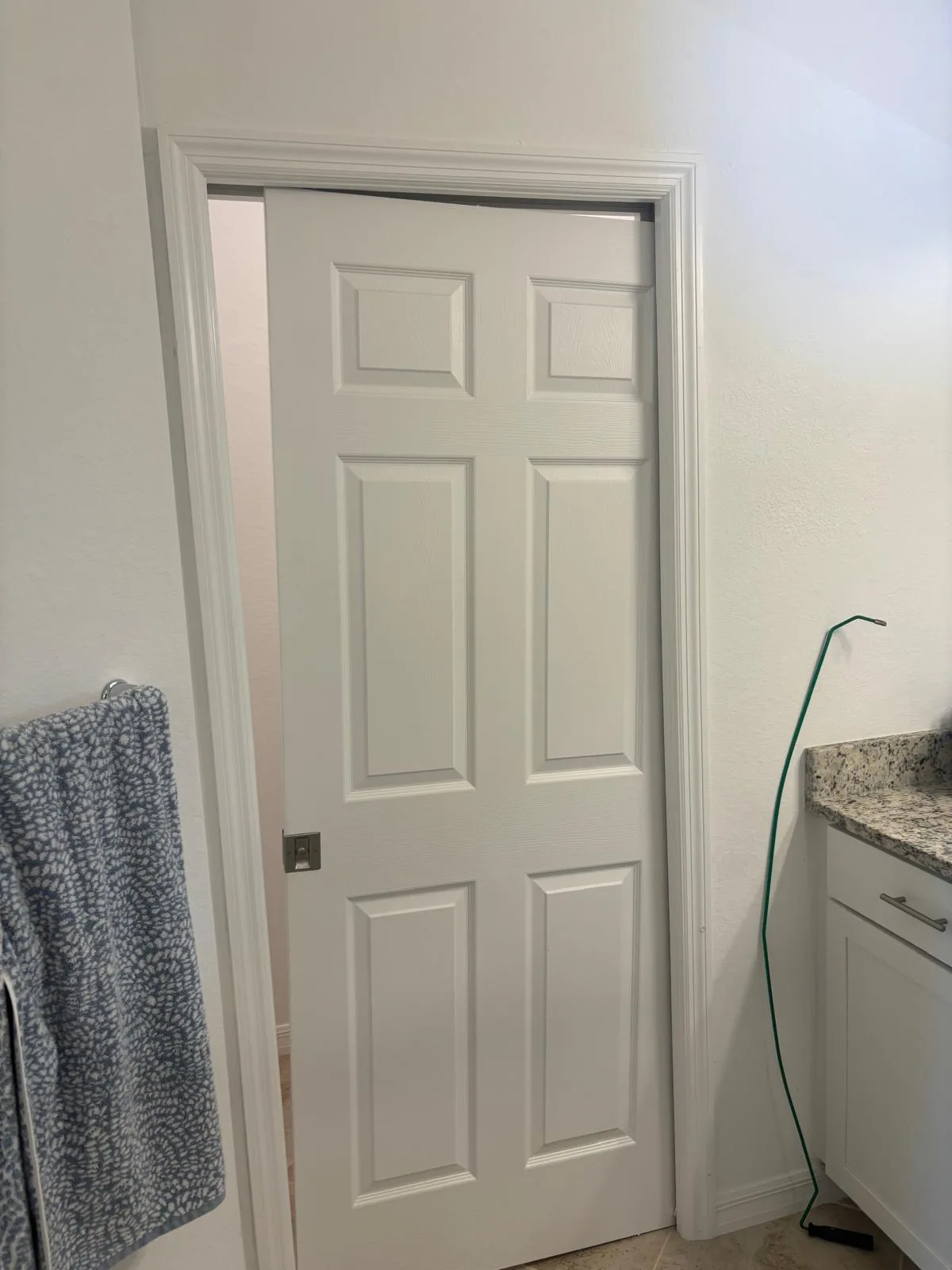
Why pocket doors break down on the Treasure Coast
Pocket doors are common in bathrooms, closets, and pantries across the Treasure Coast. They save space, but the tradeoff is that all the hardware is hidden inside the wall. Older homes in Stuart and Fort Pierce often have pocket doors with original hardware that has been rolling back and forth for 30+ years. The rollers wear out, the track corrodes in Florida's humidity, and the floor guide gets ground down from daily use. Newer builds in Tradition and Port St. Lucie aren't immune either. Builder-grade pocket door hardware is lightweight and starts failing within 5 to 10 years.
The biggest challenge with pocket doors is getting to the hardware. Everything is buried inside the wall. That scares most homeowners away from even trying a repair. But we've done hundreds of these across the Treasure Coast, and we know how to access the rollers and track without tearing up your drywall. It takes the right approach and the right tools.
How we repair pocket doors.
Pocket door repair is one of those jobs that looks complicated but follows a clear process once you know what you're doing. Here is how we handle it, step by step.
Access the Pocket Cavity
We remove the trim and casing around the door opening. This gives us access to the overhead track and lets us lift the door panel out of the pocket without cutting into drywall.
Diagnose the Problem
With the panel out, we inspect the rollers, track, floor guide, and the door panel itself. We check for bent track sections, seized rollers, loose mounting hardware, and anything blocking the channel.
Repair or Replace Hardware
We swap out worn rollers, straighten or replace the track, install new floor guides, and fix the latch mechanism. Most pocket doors use standard hardware that we carry on the truck.
Reassemble and Test
We hang the door back on the track, reinstall the trim, test the slide in both directions, and adjust the latch alignment. The door should glide with one finger when we're finished.
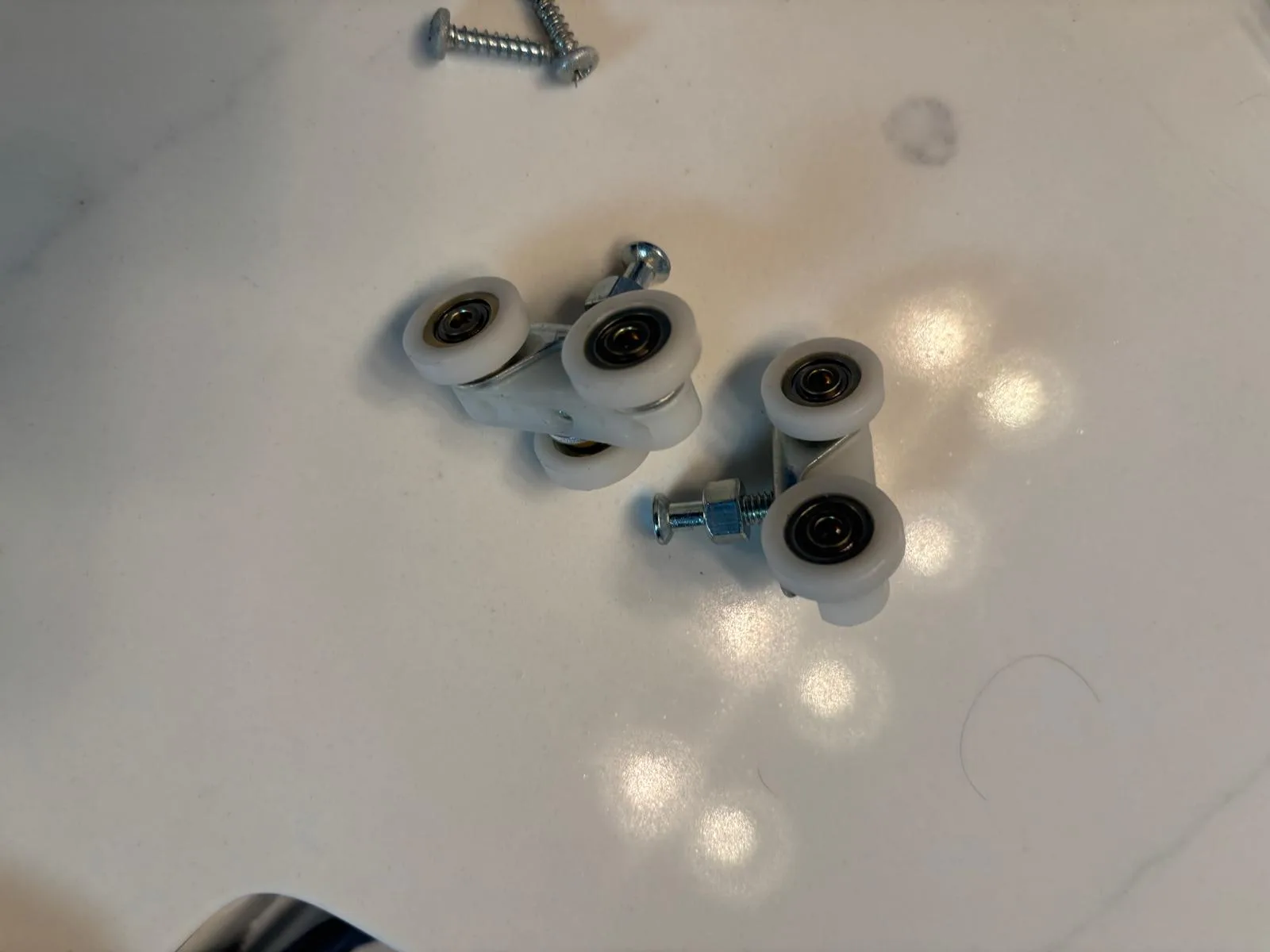
Roller replacement is the most common fix
About 70% of the pocket door calls we get come down to the rollers. They're small wheels mounted to brackets at the top of the door, and they ride along the overhead track. After years of use, the bearings seize, the wheels flatten, or the brackets crack. The fix is straightforward: we pull the door, swap the roller assemblies, and hang it back up. It's the same concept as a sliding glass door roller replacement, just different hardware. If your pocket door used to slide easily and now takes real effort, worn rollers are almost certainly the cause.
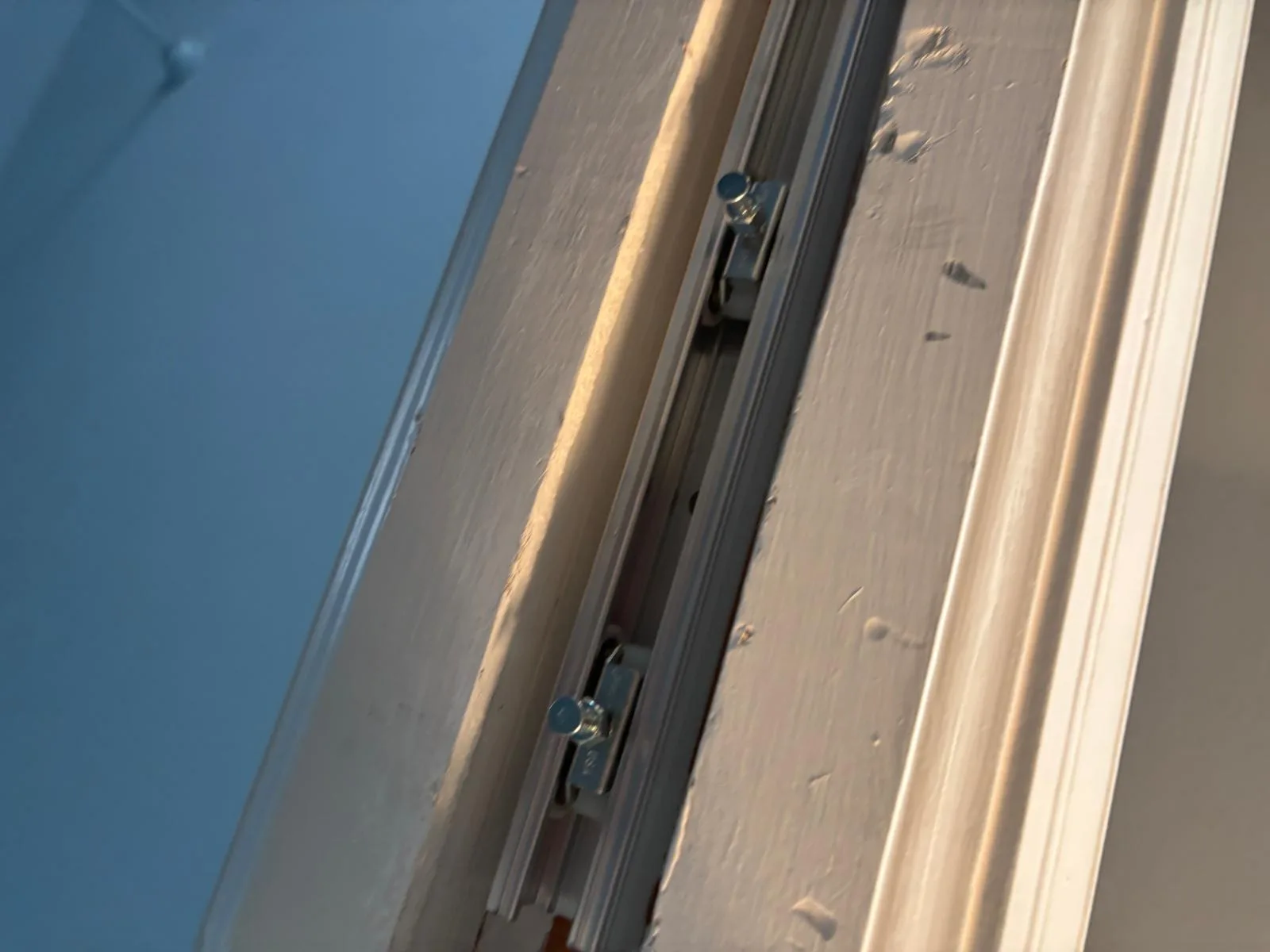
Track problems inside the wall
The track is a metal rail mounted to the header inside the wall pocket. It can bend from the door being forced, sag if the mounting screws pull loose, or collect debris that blocks the rollers. Track repair on a pocket door works the same way as on a sliding glass door, but the access is tighter. We straighten bent sections with specialty tools, tighten loose mounts, and clear any obstructions. If the track is corroded through or badly damaged, we replace the full rail. Most tracks are standard sizes, so we usually have the right one on hand.
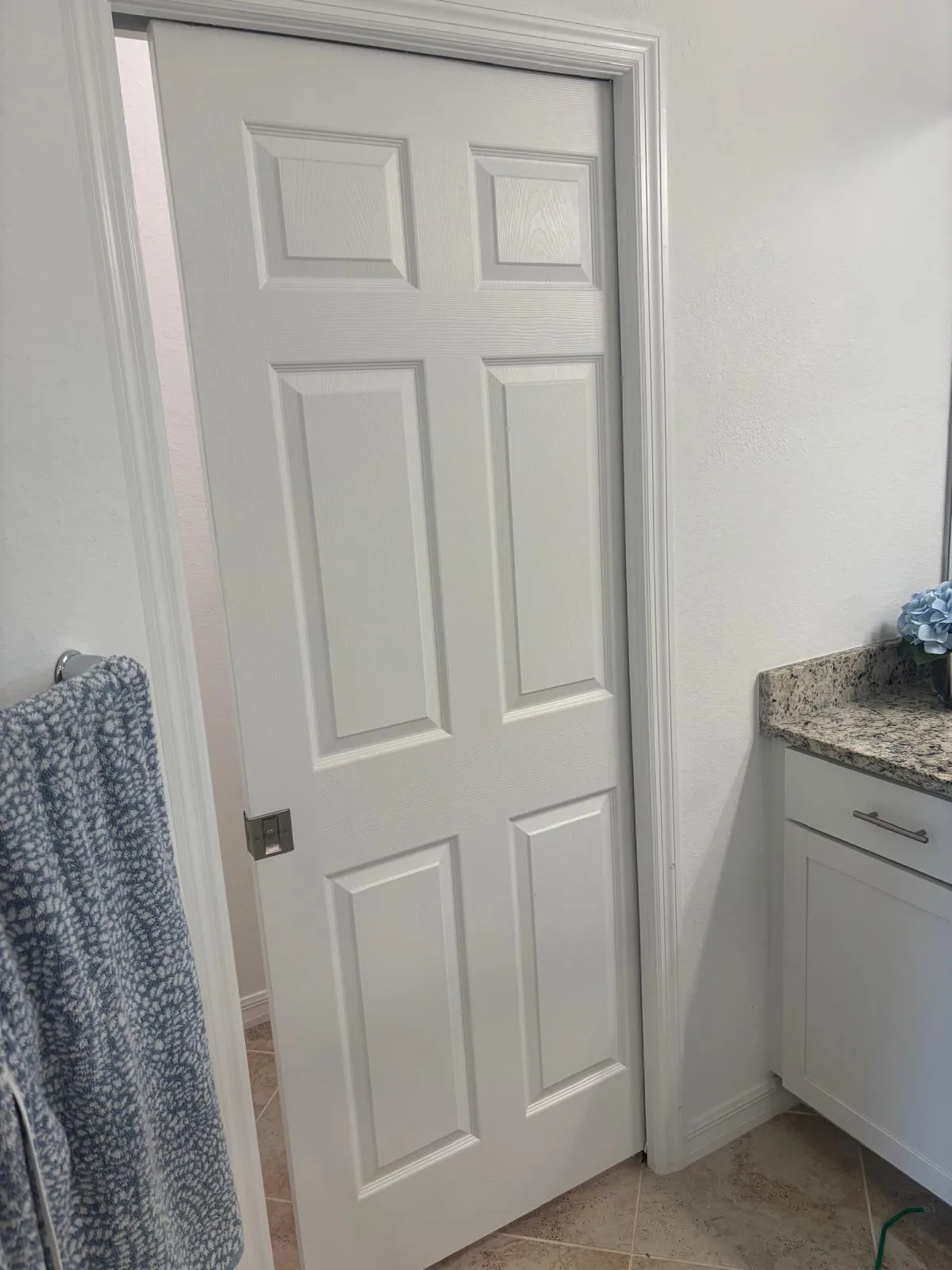
Latch, lock, and guide adjustments
A pocket door that won't latch is almost as frustrating as one that won't move. We repair and replace pocket door privacy locks, edge pulls, and flush latches. The latch mechanism on pocket doors is different from standard doors because it sits flush with the door edge. We also replace the floor guide, which is the small plastic or metal piece at the bottom of the opening that keeps the door from swinging. A worn floor guide is the main reason pocket doors wobble and rattle.
Pocket Door Repair Pricing
* Estimated labor costs. Parts and materials may be additional. We quote the exact price before starting.
Roller replacement and latch adjustment starts at $129. Full track replacement or multi-component repairs run $199 to $349, depending on the hardware needed and the complexity of the access. Price includes parts and labor. We confirm the exact cost before we start. No surprises. If we find something unexpected inside the wall cavity, we'll talk to you before doing any additional work.
Common in Treasure Coast homes.
Pocket doors show up everywhere on the Treasure Coast. Bathrooms, master closets, laundry rooms, pantries, and home offices. Older homes in Stuart and Jensen Beach have them in hallways and between living spaces. Newer construction in Tradition and Port St. Lucie uses them to save space in smaller floor plans. We've repaired pocket doors in 1970s ranch homes, 1990s CBS block houses, and brand-new builds. The hardware varies, but the problems are always the same: rollers, tracks, and guides.
Most pocket door problems are the same issues we fix on sliding glass doors every day. The rollers wear out, the track gets damaged, and the door stops sliding properly. The only difference is the access. You can't just pop off a head stop and lift out a pocket door. You have to remove the casing, work inside a tight cavity, and put everything back together clean. That's where our experience matters. Call (772) 207-4146 and let us take care of it.
Serving the entire Treasure Coast.
Treasure Coast Sliding Door Repair handles pocket door repairs across Stuart, Port St. Lucie, Jensen Beach, Fort Pierce, Vero Beach, Palm City, Hutchinson Island, Hobe Sound, Port Salerno, and Indiantown. That covers Martin County, St. Lucie County, and Indian River County. Most appointments are same-day or next-day. We're the residential door repair team that knows pocket doors inside and out.