We install energy-efficient sliding doors with Low-E glass and insulated frames for $1,200 to $3,800. ENERGY STAR rated options available from Andersen, PGT, and Pella. Lowers your AC bills in Florida's long cooling season. Installation takes 4 to 8 hours. Call (772) 207-4146 for a free quote.
Signs your sliding door is wasting energy.
Older sliding doors are some of the biggest energy leaks in a Florida home. Single-pane glass, aluminum frames with no thermal break, and worn weatherstripping all let heat pour into your living space. Your AC works overtime to compensate. If your door was installed before 2010, chances are it doesn't meet current ENERGY STAR standards for the Southern climate zone. Upgrading to a modern energy-efficient door can cut your cooling costs near that opening by 10% to 25%.
Hot Glass to the Touch
Touch your sliding door glass on a sunny afternoon. If it's hot, your glass isn't blocking solar heat effectively.
High Electric Bills
Florida homeowners spend $200 to $400+ per month on AC. An inefficient sliding door makes it worse.
Single-Pane Glass
If your door has single-pane glass, it has almost no insulating value. Modern doors use dual-pane with argon gas fill.
Foggy or Cloudy Glass
Condensation between the panes means the seal has failed. The insulating gas has escaped and the glass offers poor thermal performance.
What is Low-E glass and why does it matter?
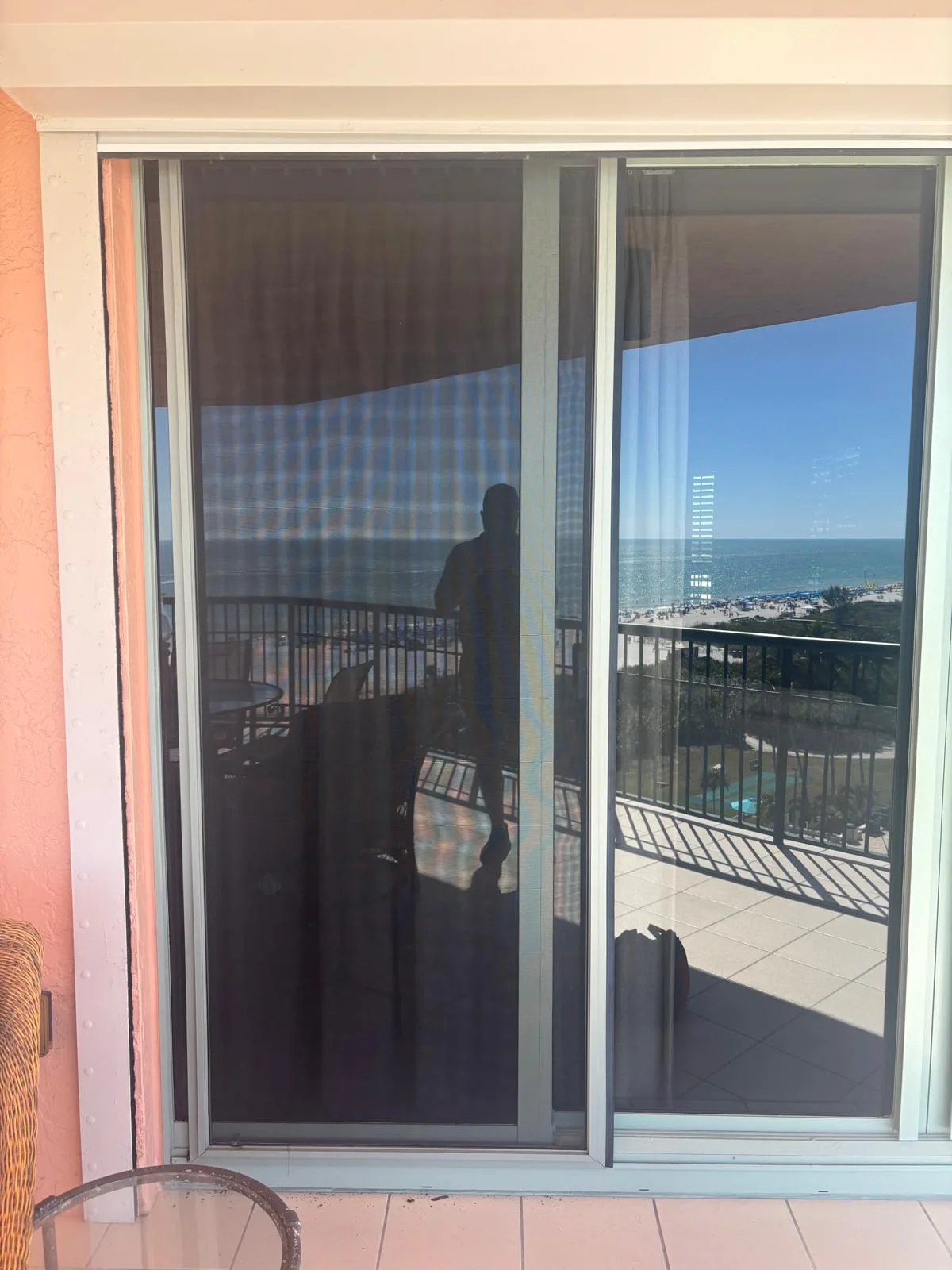
Low-E stands for low emissivity. It's a microscopic metallic coating on the glass that reflects infrared heat while letting visible light pass through. In Florida, Low-E glass keeps the sun's heat outside where it belongs. You won't see the coating, but you'll feel the difference. The area near the door stays cooler, and your AC doesn't have to run as hard. Andersen, Pella, and PGT all offer Low-E glass options on their sliding doors.
Understanding U-factor and SHGC ratings.
Two numbers tell you how energy-efficient a door really is. The U-factor measures insulation performance. Lower is better. For Florida, look for a U-factor of 0.30 or less. SHGC (Solar Heat Gain Coefficient) measures how much solar heat the glass lets through. In our climate, you want a low SHGC of 0.25 or less. ENERGY STAR certified doors for the Southern zone meet both thresholds. We'll help you pick the right specs for your home and budget.
How we install your energy-efficient door.
Consultation and Sizing
We measure your opening, assess your current door, and recommend the best energy-efficient options for your budget and needs. We'll explain the U-factor and SHGC differences between brands.
Remove the Old Door
We carefully remove your existing door, clean the opening, and inspect for any frame damage that needs fixing before the new door goes in.
Install the New Door
We set, level, and secure the new door. Proper shimming and flashing ensure maximum energy performance and a watertight seal.
Seal and Test
We apply sealant, install fresh weatherstripping, and test the door for smooth operation, locking, and draft elimination.
Energy-efficient and impact-rated in one door
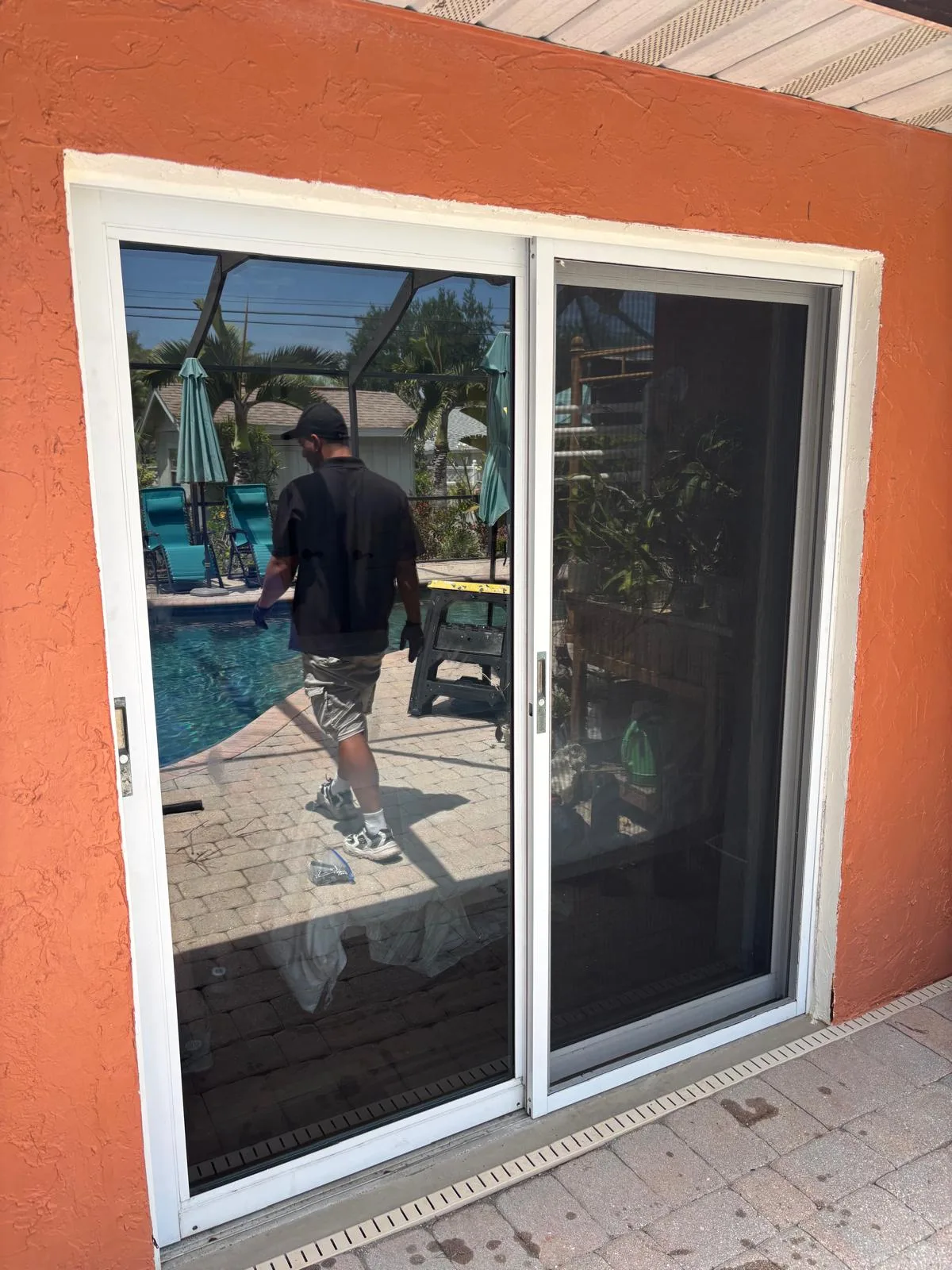
Need hurricane protection and energy savings? Many manufacturers offer doors that are both impact-rated and ENERGY STAR certified. PGT, Andersen, and Pella all make combination models. If you live in the Wind-Borne Debris Region (east of US 1 on the Treasure Coast), check out our hurricane impact door installations for options that check both boxes.
Energy-Efficient Door Pricing
* Estimated labor costs. Parts and materials may be additional. We quote the exact price before starting.
Standard dual-pane Low-E glass doors start at $1,200 installed. ENERGY STAR rated doors with argon gas fill and insulated vinyl or composite frames run $1,800 to $2,800. Premium options from Andersen or Marvin with triple-pane glass or upgraded hardware run $2,800 to $3,800. Price includes old door removal, installation, sealant, and testing.
Condo-ready energy-efficient upgrades
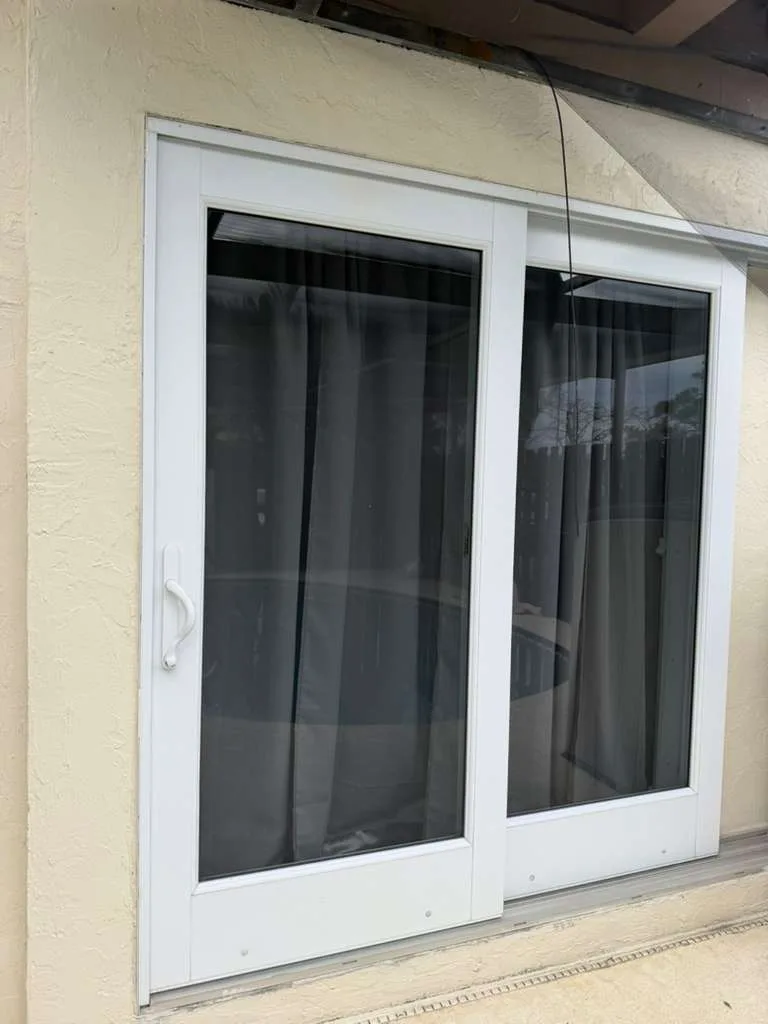
Florida condos face unique energy challenges with large glass openings and direct sun exposure. We install energy-efficient sliding doors with Low-E coatings and insulated frames that reduce cooling costs while meeting HOA and building code requirements across the Treasure Coast.
Energy-efficient door brands we carry.
Serving the entire Treasure Coast.
Treasure Coast Sliding Door Repair installs energy-efficient doors across Stuart, Port St. Lucie, Jensen Beach, Fort Pierce, Vero Beach, Palm City, Hutchinson Island, Hobe Sound, Port Salerno, and Indiantown. Martin County, St. Lucie County, and Indian River County. Free quotes available.