
Clean and lubricate your sliding door track every 3 months with silicone spray. Do a full check (rollers, lock, weatherstripping) twice a year. This 15-minute routine extends roller life from 6-8 years to 12-15 years. Professional maintenance costs $89-$149 and catches problems before they turn into $300+ repairs.
Treasure Coast Sliding Door Repair has maintained and repaired over 3,500 sliding doors across Martin County, St. Lucie County, and Indian River County since 2009. The single biggest thing we wish every homeowner knew? Fifteen minutes of maintenance twice a year can double the life of your rollers and prevent most of the expensive repairs we get called for. Most sliding door problems don't appear overnight. They build up slowly over months of dirt, grit, and humidity doing quiet damage. Here's the exact routine we recommend to our own customers.
Why Maintenance Matters More in Florida
Florida's climate is tough on sliding doors. The Treasure Coast sees average humidity levels above 70% for most of the year, according to NOAA climate data. That moisture gets into roller bearings and accelerates corrosion. Add salt air if you're anywhere near the coast, and the damage speeds up even more. Sand, pollen, pet hair, and construction dust pack into tracks constantly. In communities like those in Port St. Lucie where new construction is still happening, fine concrete dust is a major track clogger. Without regular cleaning, that grit acts like sandpaper on your roller wheels every time you open the door. A door that could've lasted 12 years needs rollers at 6.
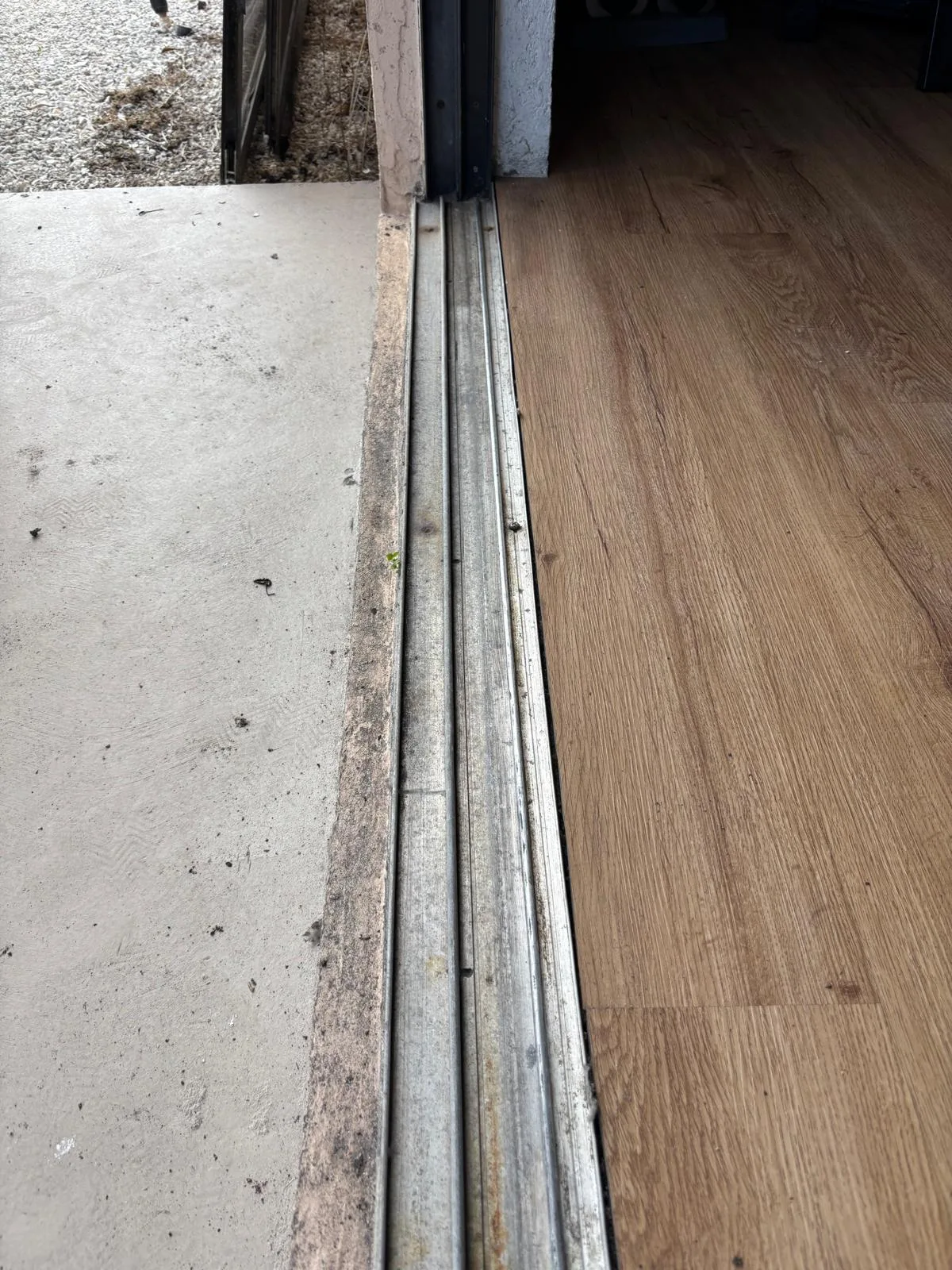
15 minutes saves hundreds
This is what a well-maintained track looks like. No debris buildup, smooth rails, and the rollers spin freely. Compare this to a neglected track, and you'll understand why one door lasts twice as long as the other.
The Quarterly Track Cleaning Routine
Every 3 months, spend 10 minutes on your sliding door track. Grab your vacuum with the crevice attachment and run it along the full length of the bottom track. Get into both channels. Then take an old toothbrush or stiff nylon brush and scrub any caked-on grime the vacuum missed. Focus on the corners where the track meets the door frame. That's where dirt packs in hardest. After brushing, wipe with a damp cloth to pick up loose particles. Finally, spray a light coat of silicone-based lubricant along both rails and slide the door back and forth a few times. That's it. If you have pets, do this monthly instead of quarterly. Pet hair is the number one track debris we see.
What to Lubricate (and What Never to Use)
Use silicone-based spray lubricant on the bottom track rails, the top track channel, and the lock mechanism. A $6 can from any hardware store lasts a full year. Here's what you should never use: WD-40, cooking spray, petroleum jelly, motor oil, or any oil-based product. WD-40 is a solvent, not a lubricant. It evaporates and leaves a sticky residue that attracts dirt and makes the problem worse. Andersen, PGT, and most major door manufacturers specifically recommend silicone spray. It doesn't attract debris, it repels moisture, and it lasts much longer than petroleum-based alternatives.
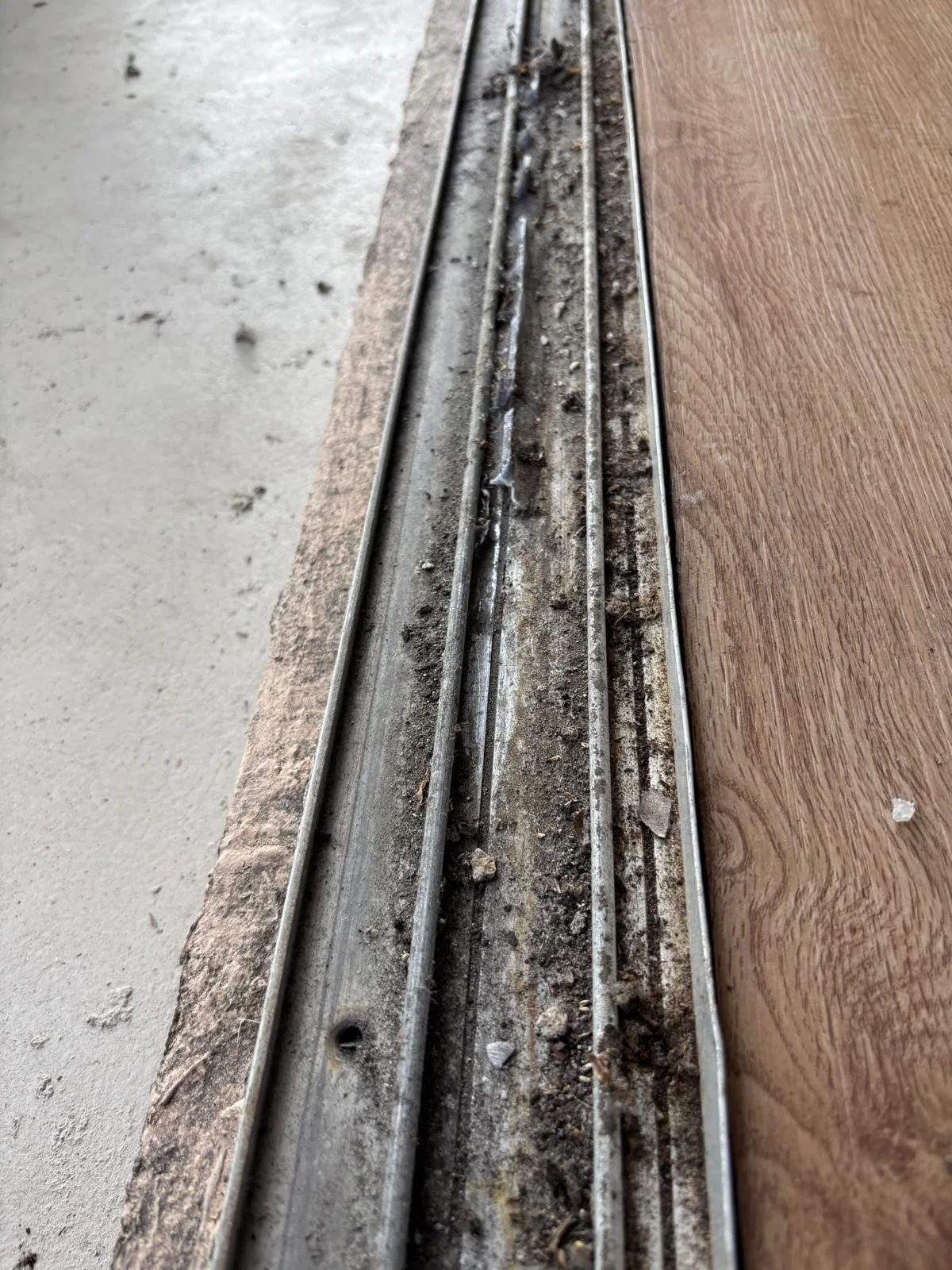
This is what neglect looks like
Packed-in dirt, pet hair, dead insects, and moisture damage. The rollers on this door were grinding metal on metal. A $6 can of silicone spray and 15 minutes every quarter would have prevented a $249 roller replacement.
The Twice-a-Year Full Checkup
Two times a year, do a deeper inspection. We recommend May (before hurricane season starts June 1) and December (after hurricane season ends November 30). During your full checkup, test the lock. Does it engage smoothly? Does the latch catch the strike plate firmly? Try pulling the door from the outside when locked. If it shifts or rattles, the lock needs attention. Check the weatherstripping along both sides and the top of the door. Look for cracks, gaps, tears, or sections that have pulled away from the frame. Damaged weatherstripping lets in drafts, rain, and insects. Examine the glass seals by looking for fog or condensation between the panes. Finally, slide the door open and listen. Smooth and quiet is good. Grinding, scraping, or squeaking means trouble.
Pre-hurricane season checklist
Before June 1: clean the track, lubricate, test the lock, check weatherstripping, and make sure the door closes flush with no gaps. A door that doesn't seal properly in a storm can let wind-driven rain cause thousands in water damage. If anything feels off, call (772) 207-4146 for a pre-season inspection.
Roller Health: How to Check Without Removing the Door
You don't need to pull the door off to check your rollers. Open the door halfway and grab the top edge. Try lifting it. A healthy door on good rollers will lift slightly (maybe 1/8 inch) and feel springy. A door on worn rollers won't budge or will feel dead and heavy. Next, slide it slowly and listen. Smooth rolling with minimal resistance means the rollers are fine. If you feel bumps, hitches, or have to push harder in certain spots, the rollers are starting to wear. On the Treasure Coast, we tell homeowners to expect roller replacement at 8 to 12 years for inland homes and 5 to 8 years for homes near the water. Regular maintenance pushes those numbers higher.
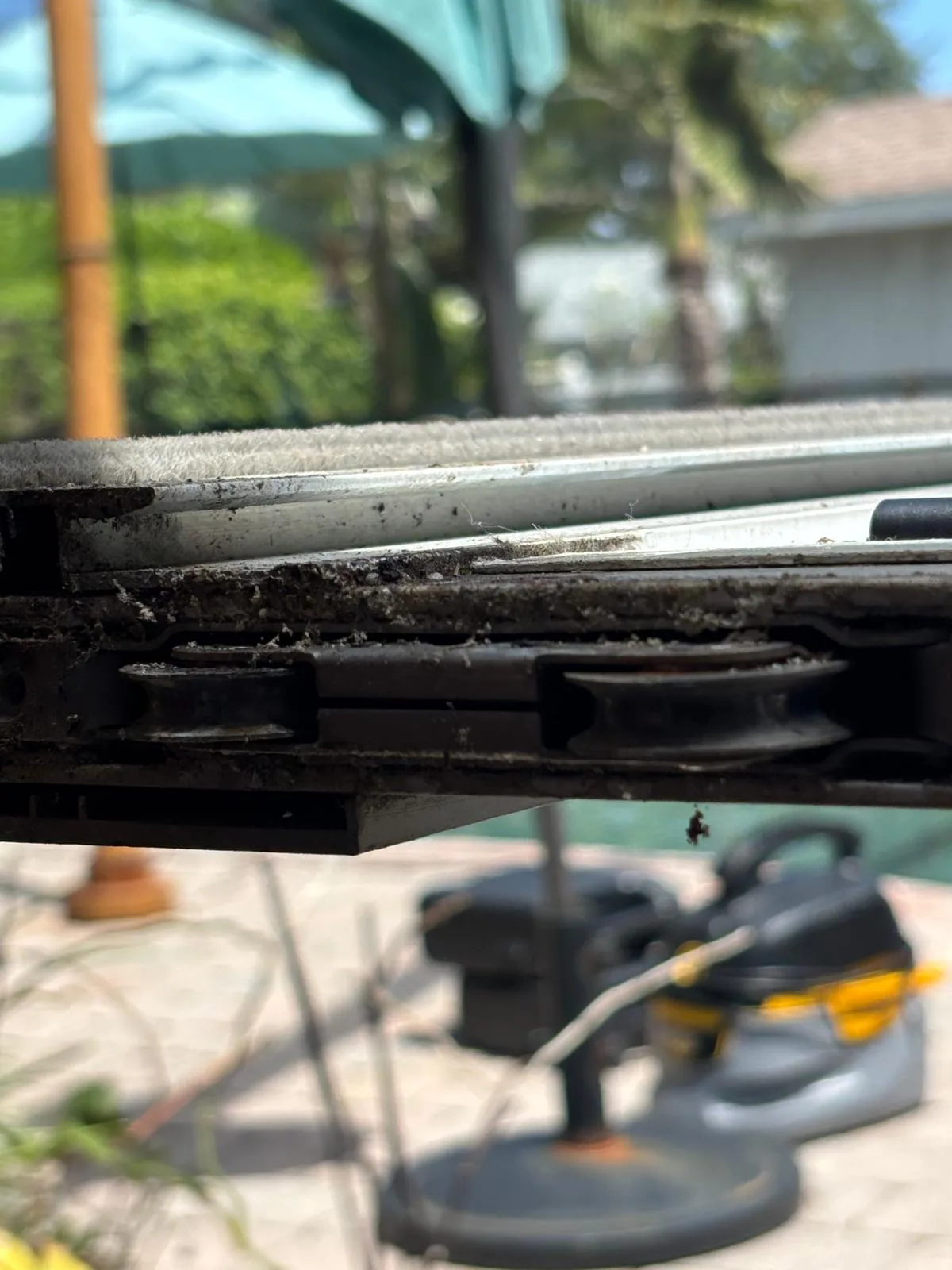
What happens without maintenance
These rollers came from a home in Stuart near the St. Lucie River. Salt air and zero maintenance meant full corrosion in under 7 years. The homeowner paid $249 for new rollers. Regular cleaning and lubrication could have given these rollers another 5 years of life.
Weatherstripping and Glass Seal Inspection
Weatherstripping runs along the edges of the door panel and the frame. Its job is to seal the gap between the moving door and the stationary frame. Over time, Florida's heat and UV exposure cause weatherstripping to crack, shrink, and lose its flexibility. Run your hand along all the weatherstripping and feel for gaps, hardened sections, or pieces that have pulled loose. Also look at the bottom sweep, the flexible strip at the very bottom of the panel. If it's torn or missing, you're losing air conditioning and inviting water in during storms. For the glass, look between the panes from different angles. Fog, moisture droplets, or a cloudy haze means the insulated glass seal has failed. That can't be maintained away. The glass panel needs replacing.
What Professional Maintenance Includes
A professional sliding door maintenance visit from Treasure Coast Sliding Door Repair costs $89 to $149. Here's what we do: deep-clean the track (both channels, corners, and threshold), apply professional-grade silicone lubricant to the track and rollers, adjust roller height for proper alignment, test and lubricate the lock mechanism, inspect weatherstripping and note any sections that need replacing, check the glass seals for failure, test the door's balance and rolling resistance, and give you a written report on your door's condition. Most visits take 30 to 45 minutes per door. We'll tell you exactly what's wearing and how long you've got before something needs replacing. No pressure, just honest information so you can plan ahead.
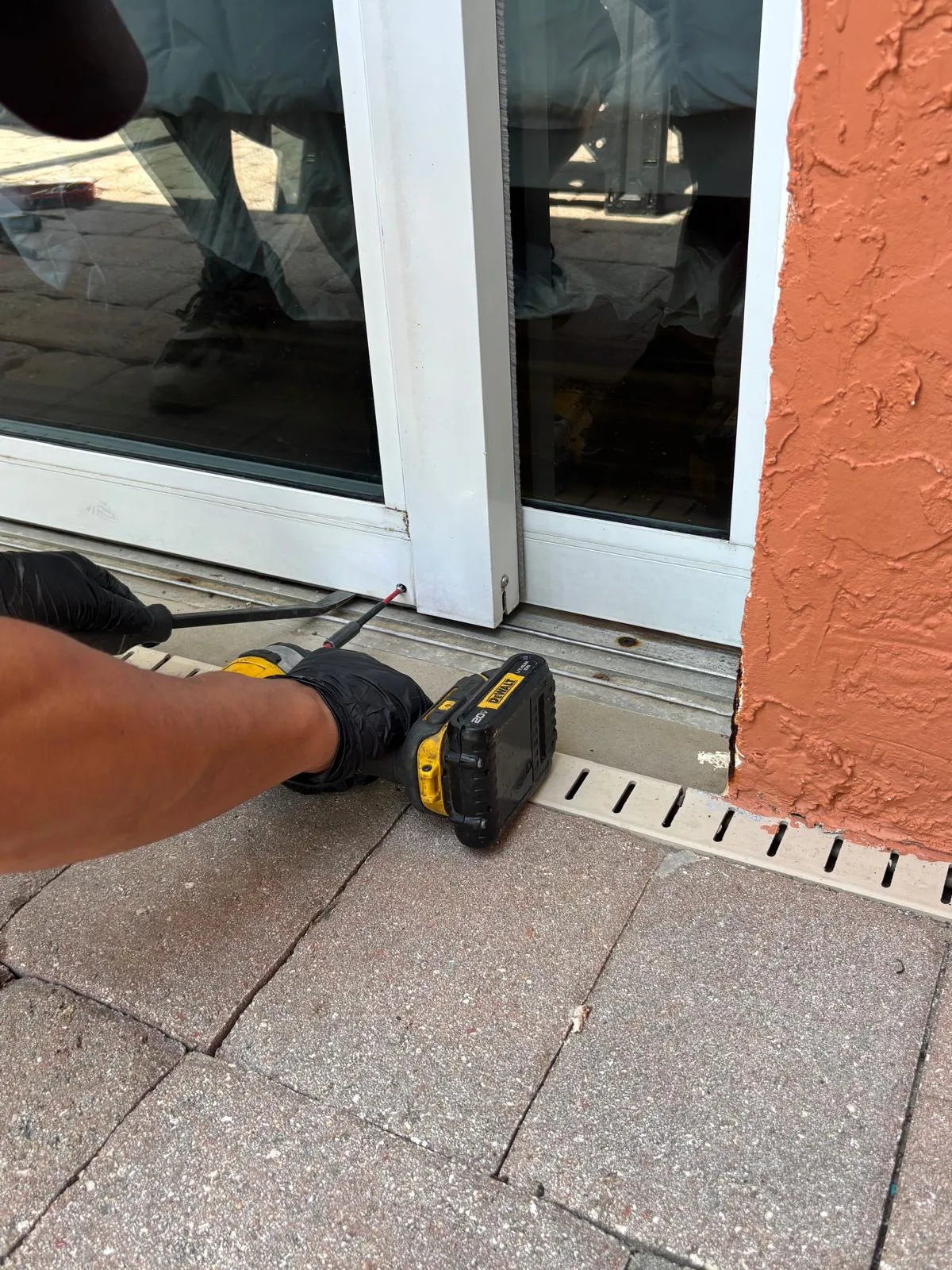
The pro difference
We catch things homeowners miss. Roller bearings that are starting to roughen up. Weatherstripping that looks fine but has lost its compression. A lock that engages but doesn't actually hold. Catching these early saves you hundreds down the road.
How Often Should You Schedule Pro Maintenance?
For most Treasure Coast homes, once a year is plenty if you're doing the quarterly DIY cleaning yourself. If your home is on Hutchinson Island, near the Indian River Lagoon, or in any salt-air-exposed area, twice a year is better. Same goes if you have multiple sliding doors. A home with 3 or 4 sliders is more practical to maintain professionally than to DIY each one quarterly. We offer multi-door discounts. Call (772) 207-4146 and ask about our maintenance visits. Spending $89 to $149 once a year is a lot cheaper than the $200 to $400 repair bills that come from skipping it. Think of it like changing the oil in your car. You can skip it for a while, but eventually you'll pay for it.