
We got called to Treasure Coast RV Park in Port St. Lucie to fix a seized sliding door on an RV. The rollers were locked up from a combination of road vibration and Florida humidity. RV sliding doors are lighter, narrower, and use different rollers than residential doors, but the fix is similar. Roller replacement ran about $175. Thanks to the team at A1 RV Repair for sending the customer our way.
Treasure Coast Sliding Door Repair mostly works on houses. Condos, single-family homes, townhomes, the occasional commercial building. That's 99% of what we do. So when the phone rang on a Tuesday morning and the guy on the other end said he had a stuck sliding door on a Class A motorhome, I'll admit I paused for a second. "On a what?" He explained. He was parked at Treasure Coast RV Park in Port St. Lucie, right off US 1. The sliding door between his living area and the bedroom wouldn't budge. It had been getting worse for weeks and now it was completely locked up.
How We Got the Call
The RV owner had already called his usual guy. A1 RV Repair handles his mechanical work, engine stuff, generator, plumbing, all the RV-specific systems. But a sliding door? That's not really their thing. It's ours. So the team at A1 RV Repair called us and said, "Hey, we've got a customer with a sliding door problem. Can you handle it?" We said sure, why not.
That's how good referrals work. A1 RV Repair knows RVs inside and out, but they also know when something falls outside their wheelhouse. Instead of guessing at a sliding door repair, they sent the customer to someone who does it every single day. We really appreciate that kind of professional trust, and we'd do the same thing in reverse. If one of our customers needs RV mechanical work, we're sending them to A1.
Showing Up at Treasure Coast RV Park
Treasure Coast RV Park sits just off the US 1 corridor in Port St. Lucie. Nice spot. Big rigs, long-term snowbirds, a few full-timers who live in their coaches year-round. This particular customer was a full-timer. A retired couple who'd driven down from Ohio for the winter and decided to stay through spring. Their rig was a 38-footer parked under some decent shade, which matters when you're working outside in Florida.
I pulled up around 9 AM. The wife met me at the door and pointed at the slider. "It won't move. At all. My husband's been yanking on it for a week." I could see the problem before I even touched it. The door was sitting crooked in the track, the bottom corner was dragging on the threshold, and there was a faint rust stain on the track rail where something metallic had been grinding.
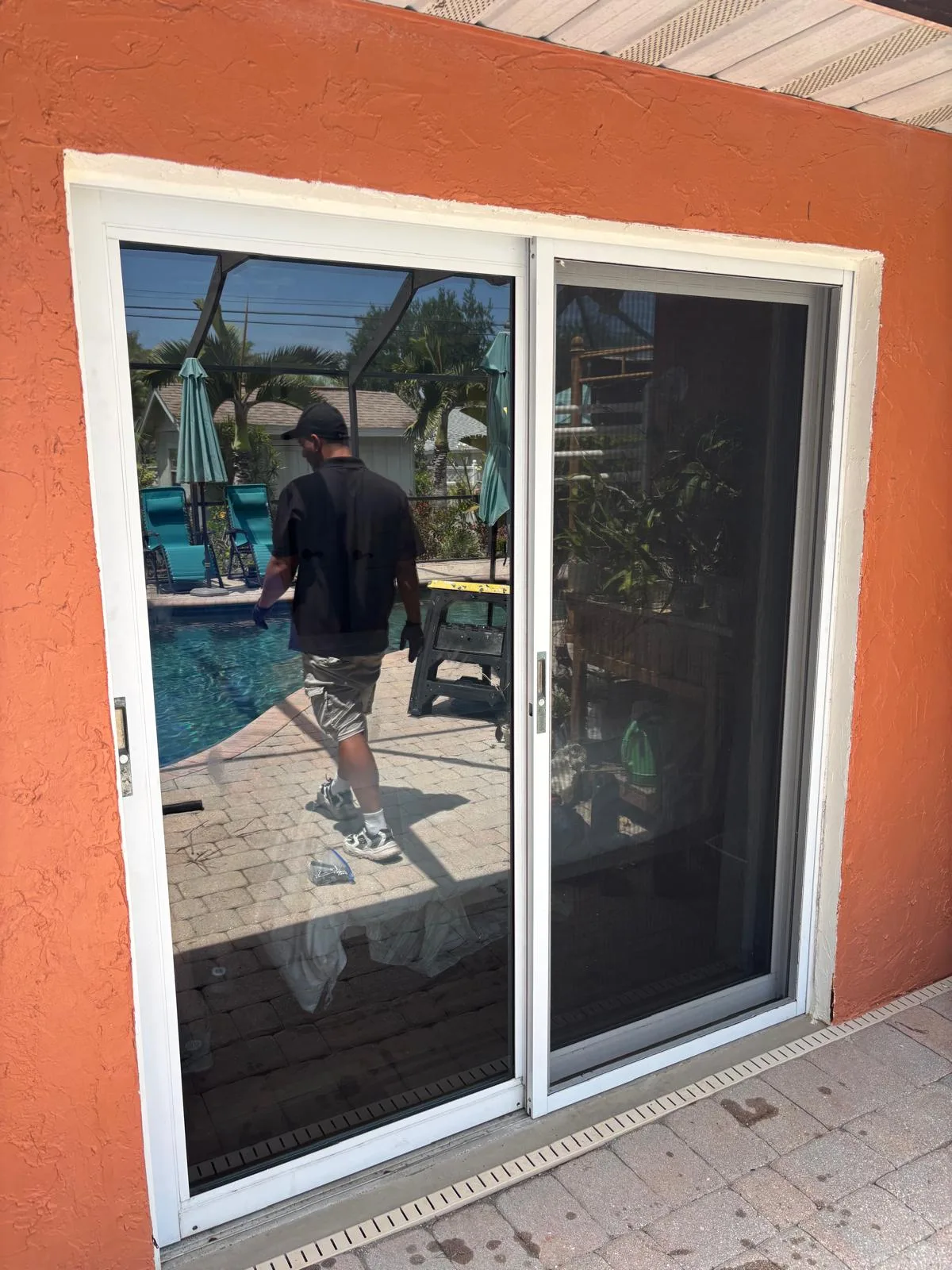
First look told the story
The rust stain on the track was the giveaway. That means a steel roller component has been grinding against the aluminum track for a while. The rollers weren't just worn. They were seized. Road vibration and Florida humidity had done their thing.
What Was Wrong: Rollers Seized from Road Vibration
Here's what happens to sliding door rollers on an RV. Every mile of highway sends vibration through the frame. That constant rattling loosens the roller bearings incrementally. Tiny metal particles break free inside the bearing assembly, mixing with whatever moisture and dust got in there. On a house, the rollers sit still 99% of the time. On an RV, they're getting shaken like a maraca on every road trip.
Add Florida's humidity to that equation and you've got a recipe for fast corrosion. NOAA data puts the Treasure Coast at 75-80% relative humidity year-round. The steel bearing components in this RV's rollers had developed a layer of rust that essentially welded the wheels in place. They wouldn't spin at all. I tried lubricant first, just in case. Nothing. These rollers were done.
How RV Sliding Doors Differ from Residential
This is the part that made the job interesting instead of routine. RV sliding doors aren't just smaller versions of house doors. They're built differently, and those differences matter when you're trying to fix one.
- Lighter frames. An RV sliding door frame is about 60% the weight of a residential frame. Thinner aluminum, less material. Every pound matters in a vehicle that drives on a highway. But that thinner frame is also more flexible, which means it can twist and warp in ways a house door frame won't.
- Smaller rollers. Residential sliding door rollers are typically 1 to 1.5 inches in diameter with heavy-duty bearings. RV rollers are smaller, maybe 3/4 inch, with compact bearings designed for lighter loads. They work fine in a climate-controlled shop, but Florida humidity eats them faster because there's less bearing material to corrode through.
- Narrower tracks. RV tracks are noticeably narrower than residential tracks. The channel is shallower too. This means there's less room for debris, which is good, but also less tolerance for a roller that's even slightly out of spec. A roller that's starting to seize on a wide residential track might still work. On a narrow RV track, it locks up sooner.
- Single-pane glass. Most RV sliding doors use single-pane tempered glass, not the double-pane insulated glass you'd find in a house. Lighter, thinner, and cheaper to replace if it breaks. But also less insulating, which matters when you're running your RV's AC off a generator in July.
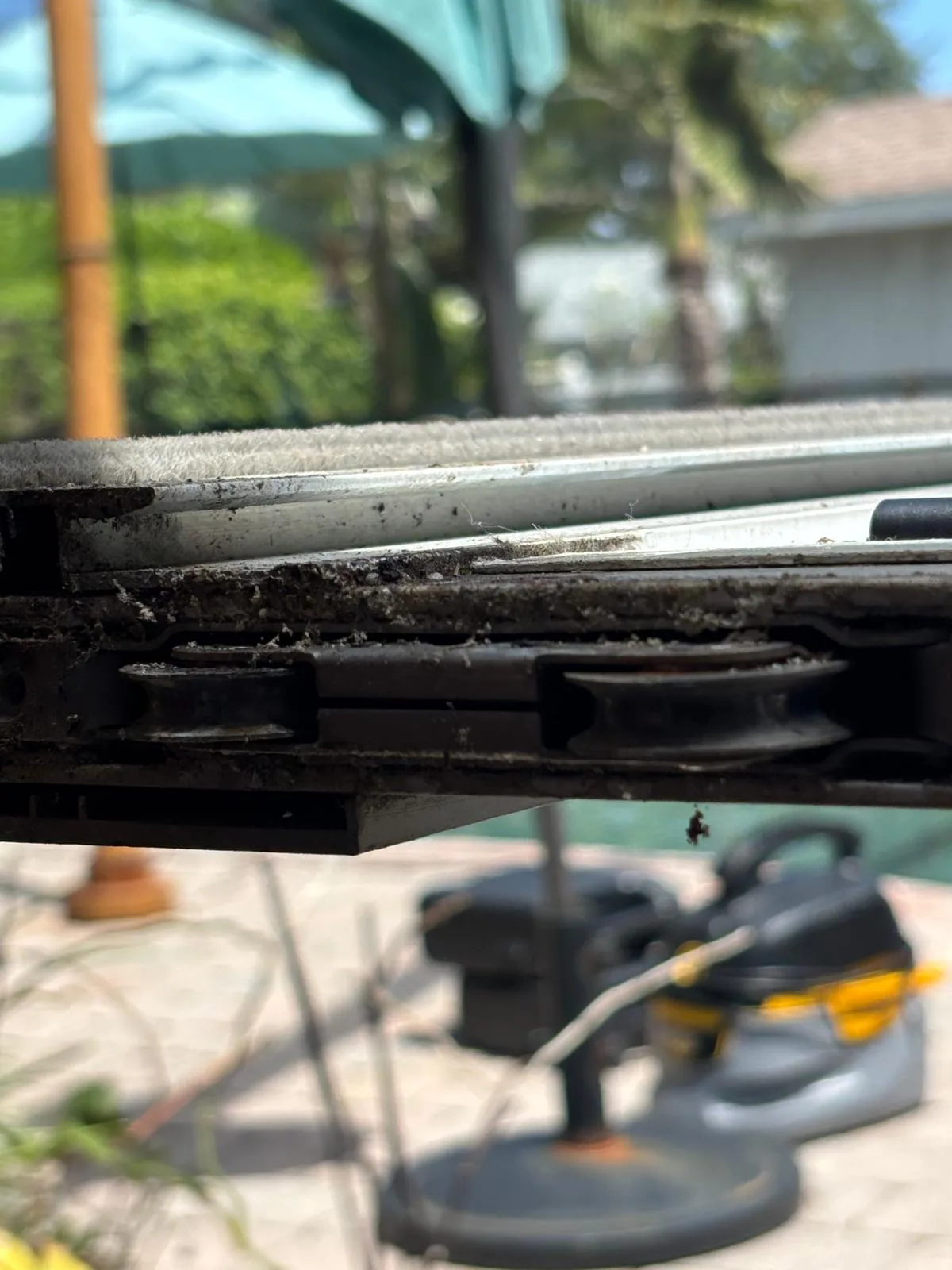
Road wear accelerates everything
House rollers sit still for years between uses. RV rollers vibrate through thousands of highway miles. That vibration loosens bearing grease, works debris into tight spaces, and causes micro-fractures in the wheels that wouldn't happen in a stationary door. It's a whole different wear pattern.
The Fix: Sourcing the Right Rollers
The tricky part wasn't removing the old rollers. That was straightforward. The door panel came off the track easily once I lifted it out of the channel. The old rollers popped out with a screwdriver and some gentle prying. The tricky part was having the right replacement rollers on the truck.
I carry about 30 different roller types for residential doors. Andersen, PGT, Pella, JELD-WEN, the common ones. RV rollers? I had two types that were close, and one of them was a match. Got lucky. The roller diameter, the housing width, and the mounting holes all lined up. If they hadn't, I'd have needed to order a specific RV roller, which would have meant a second trip a few days later.
I cleaned the track with a vacuum and brush, checked for any dents or damage from the seized rollers grinding on it (there were two small scores but nothing that needed repair), installed the new rollers, set the height adjustment, and put the door back on the track. Total time on site: about an hour. Total cost to the customer: $175.
The Door Slid Like New
The wife tested it. Slid it open, slid it closed, opened it again. Smiled. "It hasn't been that smooth since we bought it." The husband came around from the other side of the RV where he'd been watching from the window. "How long will these last?" Good question. I told him honestly: in an RV that's driving regular highway miles and parked in Florida humidity, probably 3 to 5 years before the bearings start to go again. On a house, the same rollers would last 8 to 12. Road vibration is the difference.
I also showed him how to spray dry silicone on the track every month or two, and told him to keep the track channel vacuumed when he's parked long-term. Basic maintenance that'll add a year or two to the roller life. He wrote it down on a sticky note and put it on the fridge. Good man.
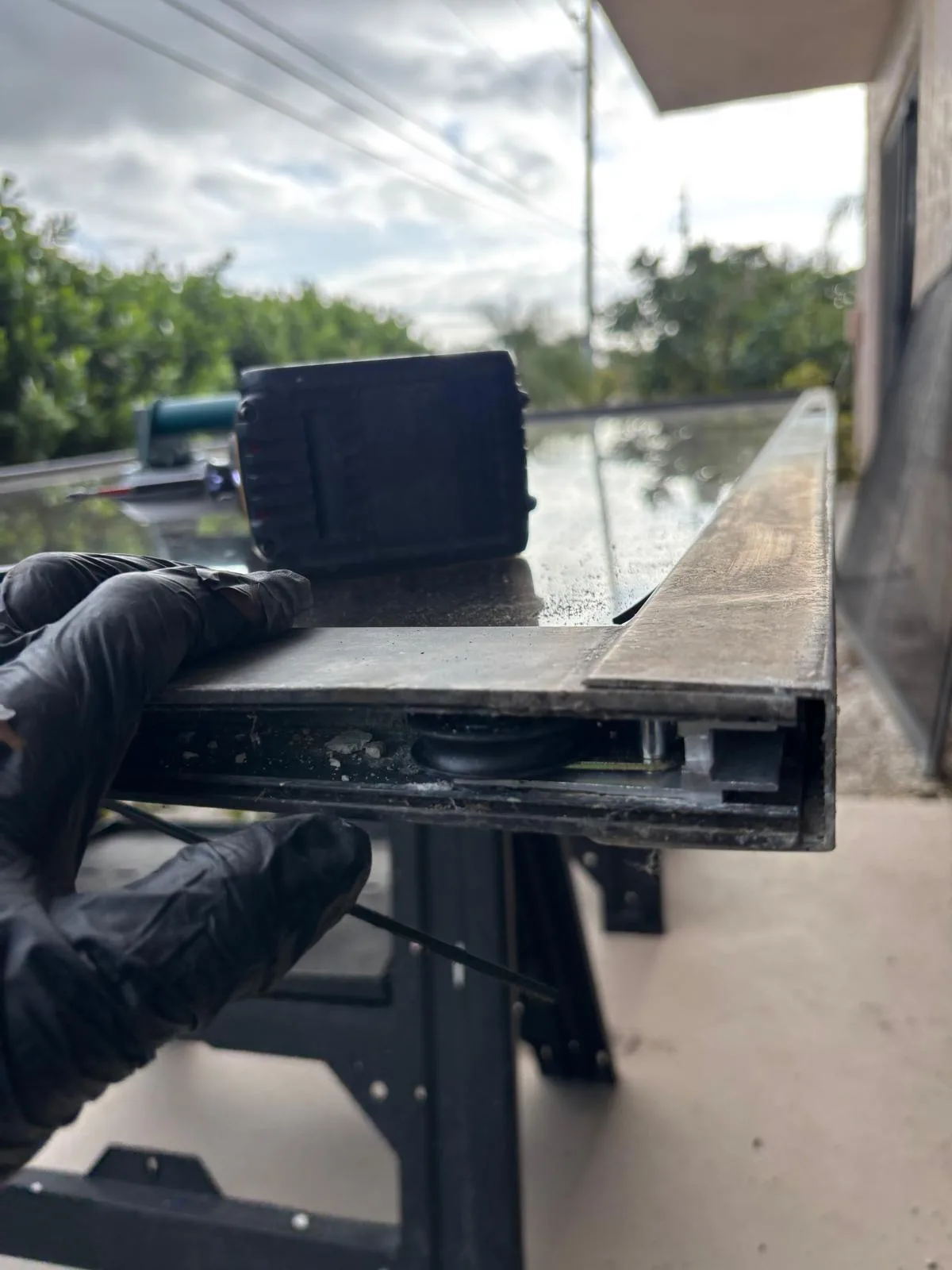
One finger to open
Same test we use on every job. After installation, the door should open with one finger. This one did. No grinding, no squeaking, no dragging. Just smooth, quiet, easy operation. That's the standard whether it's a $500,000 house or a $150,000 motorhome.
Thanks to A1 RV Repair for the referral.
This job happened because good businesses look out for their customers. The team at A1 RV Repair could have tried to muddle through a sliding door fix, but they knew we'd do it better and faster. That's professional. If you've got an RV on the Treasure Coast that needs mechanical work, give them a call. And if your RV (or house) has a sliding door that won't slide, call us at (772) 207-4146.
Got an RV with a Stuck Sliding Door?
If you're parked at Treasure Coast RV Park, or anywhere along the US 1 corridor in Port St. Lucie, Fort Pierce, Stuart, or Vero Beach, we can come to you. We've done the RV thing now. We know the differences, we carry compatible rollers, and we can usually get there the same day.
RV sliding door roller replacement runs $125-$250 depending on the roller type and your RV brand. Track cleaning and lubrication is $75-$125. We give you a price before we start, same as every job. No surprises. Call (772) 207-4146 or request an estimate online.