The Florida Building Code (FBC 7th Edition, Chapter 16) requires impact-rated glazing or approved shutters in the Wind-Borne Debris Region (WBDR). On the Treasure Coast, that includes Hutchinson Island, barrier island areas of Jensen Beach, Fort Pierce, and Vero Beach, and generally properties east of US 1 within one mile of the coast. Impact sliding doors cost $1,500-$4,500 per opening. Call (772) 207-4146 for a quote.
Treasure Coast Sliding Door Repair installs and services impact sliding doors across Martin County, St. Lucie County, and Indian River County. We've been doing this since 2009, and the number one question we get from homeowners is simple: "Do I actually need impact doors, or can I get away with shutters?" The answer depends entirely on where your property sits relative to the Florida Building Code's Wind-Borne Debris Region. Here's exactly how to figure it out.
What the Florida Building Code Actually Says
The Florida Building Code, 7th Edition (2020), Chapter 16, Section 1609.1.2, addresses wind-borne debris protection. It doesn't say "you must install impact windows." What it says is that glazed openings in buildings within the Wind-Borne Debris Region must be protected with impact-resistant glazing or an approved external protective device (shutters). You get to choose which method you use. The code references ASTM E1886 and ASTM E1996 testing standards, which simulate a 2x4 lumber missile traveling at specific speeds hitting the glass.
According to the Florida Building Commission, the WBDR applies to areas within one mile of the coast where the basic wind speed is 130 mph or greater, and it also includes all of Broward and Miami-Dade counties. For the Treasure Coast, the WBDR designation is based on proximity to the Atlantic coast and the wind speed maps in FBC Figure 1609.3.
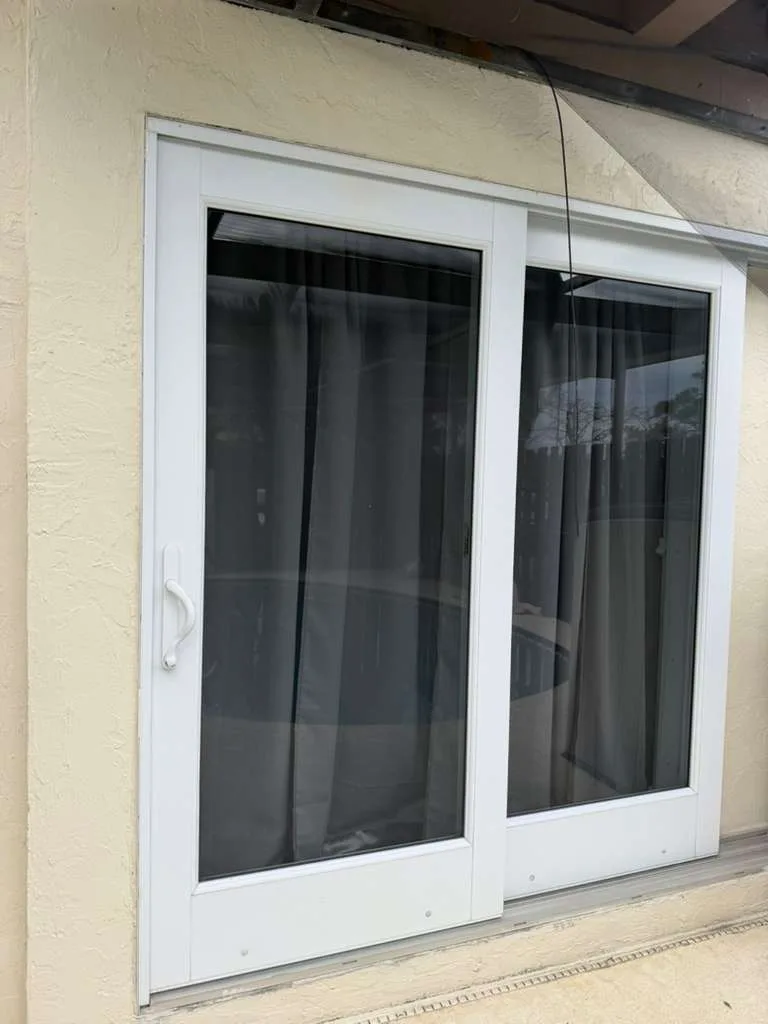
Impact glass looks like regular glass
Impact sliding doors don't look different from standard doors. The glass has an interlayer (usually PVB or SGP laminate) sandwiched between two glass panes. If something hits it, the glass cracks but stays in the frame instead of shattering inward. That's what protects you from wind-borne debris during a hurricane.
Which Treasure Coast Areas Fall in the WBDR
The Wind-Borne Debris Region doesn't follow city boundaries. It's based on distance from the coast and wind speed zones. Here's how it breaks down for the Treasure Coast based on the FBC wind speed maps and local building department enforcement.
- Hutchinson Island (all of it): North and south, Martin County and St. Lucie County sides. Every property on Hutchinson Island is in the WBDR. If you're replacing a sliding door here, impact-rated is required for new construction and replacements that involve permitting.
- Jensen Beach barrier island: The area east of the Jensen Beach Causeway along the A1A corridor. Waveland Beach, Nettles Island. All in the WBDR.
- Stuart east of Roosevelt Bridge: Sailfish Point and properties along the St. Lucie Inlet are in the zone. Downtown Stuart itself is generally outside the WBDR but close to the boundary.
- Fort Pierce barrier island: North Hutchinson Island, the A1A stretch from Fort Pierce Inlet north. WBDR applies.
- Vero Beach oceanfront: Orchid Island, Indian River Shores, Central Beach, Riomar. Properties east of Indian River Lagoon along the barrier island are in the zone.
- Inland areas (Palm City, western PSL, Indiantown): Generally NOT in the WBDR. Standard sliding doors are code-compliant, though impact doors are still a smart upgrade for hurricane protection.
Not sure about your specific property? Call your local building department. Martin County Building Division, St. Lucie County Building Services, or Indian River County Building Division can tell you definitively whether your address falls in the WBDR.
When the Code Applies to Your Situation
Here's where it gets practical. The FBC impact requirements don't apply to every situation equally. Understanding when you actually need to comply saves confusion and potentially thousands of dollars.
- New construction: Impact-rated openings (or shutters) are required in the WBDR. No exceptions. Your builder should handle this.
- Full sliding door replacement: If you're pulling a permit to replace the entire door unit (frame, glass, everything), the new unit must meet current code in the WBDR.
- Roller or hardware repair: Fixing rollers, locks, or tracks on an existing door doesn't trigger the impact requirement. You're repairing, not replacing the opening.
- Glass-only replacement: If the frame stays and only the glass panel is swapped, some building departments require impact glass in the WBDR and some don't. Check with your local office.
- Insurance vs code: Even outside the WBDR, your insurance company may require or incentivize impact protection. Many Florida carriers offer significant premium discounts for impact-rated openings.
NOAA hurricane data for the Treasure Coast.
According to NOAA's Historical Hurricane Tracks database, the Treasure Coast has been affected by tropical storm-force winds or stronger 30+ times since 1950. The region sits in an active zone where Category 1-3 hurricanes cross the coast every 7-10 years on average. Hurricane season runs June 1 through November 30. Impact doors aren't just about code compliance. They're about protecting your home and family during the next storm.
Impact Door Brands We Install and Service
Not all impact doors are created equal. The brand, glass type, and frame material affect performance, warranty, and price. Here's what we work with most often on Treasure Coast impact door installations.
- PGT WinGuard: Florida-made, excellent value. Most popular choice on the Treasure Coast. Standard 6-foot slider runs $1,800-$2,500 installed. Florida Product Approved (FL-11836).
- CGI Sentinel: Another Florida manufacturer. Strong performer in high-velocity hurricane zones. $1,900-$2,800 installed.
- Andersen 400 Series Impact: Premium option with excellent thermal performance. $2,500-$3,800 installed. Great for energy efficiency on top of impact protection.
- Pella Hurricane Shield: Mid-to-premium range. $2,200-$3,200 installed. Good warranty coverage.
- JELD-WEN Impact: Budget-friendly option. $1,500-$2,200 installed. Solid impact ratings at a lower price point.
- Marvin Ultimate: High-end. $3,500-$4,500 installed. Architectural-grade for custom homes on Orchid Island and Sailfish Point.
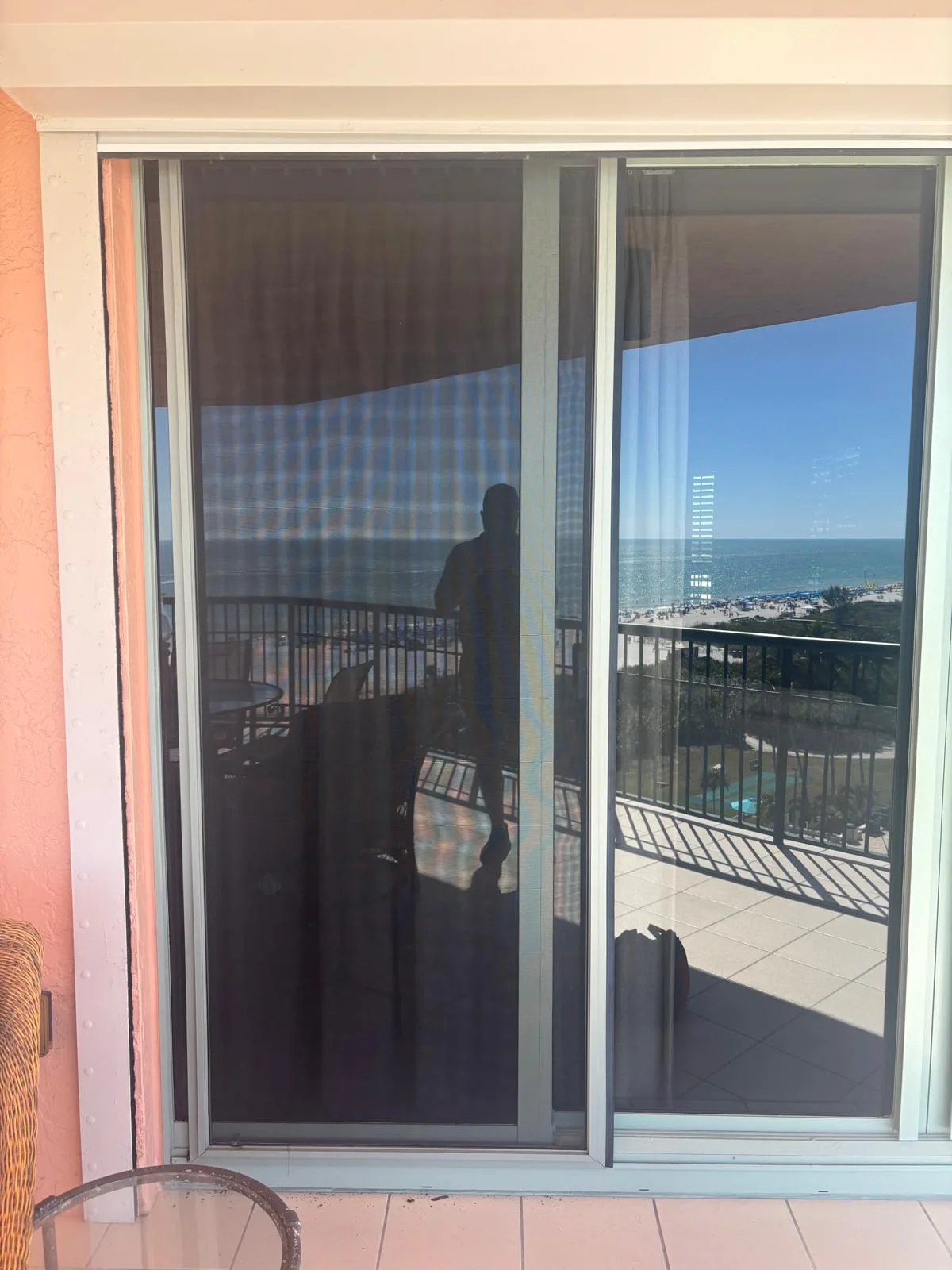
We match the door to your home
A Hutchinson Island high-rise condo has different needs than a single-family home in Fort Pierce. We'll look at your opening size, wind zone, HOA requirements, and budget to recommend the right brand and configuration.
What Impact Doors Actually Cost
Here are the real numbers. These include the door unit, frame, hardware, installation labor, and basic permitting on the Treasure Coast. They don't include any structural modifications to the opening, which are rare but sometimes needed on older homes.
- Standard 6-foot (2-panel) impact slider: $1,500-$2,800
- 8-foot (2-panel) impact slider: $2,200-$3,500
- 10-foot (3-panel) impact slider: $3,000-$4,200
- Multi-slide systems (4+ panels): $4,000-$8,000+
Yes, impact doors cost more than standard replacements. A non-impact 6-foot slider runs $800-$1,400 installed. But factor in insurance savings ($500-$2,000/year), no more putting up shutters, 24/7 storm protection, and noise reduction, and the payback period is typically 3-5 years. After that, you're saving money every year.
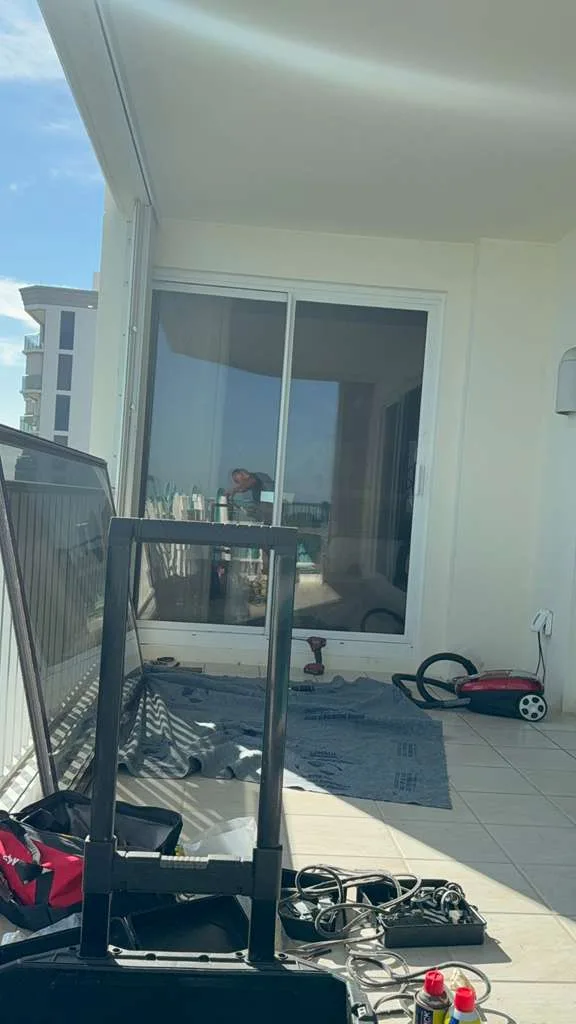
Permit and inspection included
Impact door installations in the WBDR require a building permit and final inspection. We handle the paperwork, schedule the inspection, and make sure the installation passes the first time. That's included in our pricing. No surprise fees.
Impact Doors vs Hurricane Shutters
The FBC lets you choose impact glass or shutters. Both are code-compliant. But they're very different in practice, and most Treasure Coast homeowners who've lived through a few hurricane seasons have strong opinions about which is better.
- Impact doors are always in place. No prep needed when a storm is coming. They also block UV, reduce noise, and improve energy efficiency year-round. You forget they're impact-rated because they look and work like normal doors.
- Hurricane shutters (accordion, roll-down, or panel) need to be deployed before every storm. That means climbing ladders, wrestling with metal panels, or having someone come install them. They block all light and ventilation while deployed. After the storm, they have to come down.
- Cost comparison: Shutters are cheaper upfront ($15-$35 per square foot vs $40-$80 for impact glass). But when you add up years of deployment hassle, potential insurance differences, and the fact that shutters provide zero benefit 360 days a year, impact glass usually wins for anyone planning to stay in their home 5+ years.
How to Check If Your Current Doors Are Impact-Rated
Already have sliding doors and not sure if they're impact? Here are three ways to check without calling anyone.
- Look for the bug. Impact glass has a small etched marking (sometimes called a "bug") in the corner of the glass. It'll show the manufacturer's name, glass type (laminated), and a Florida Product Approval number.
- Check the spacer bar. Look at the edge of the glass between the panes. Impact glass has a visible interlayer (usually clear or slightly tinted) between the glass sheets. It looks like a thin film sandwiched in there.
- Pull permits. If you bought the house and don't know the history, your county's online permit search can show what was installed and whether it was permitted as impact-rated.
If you're still not sure, call us at (772) 207-4146. We can identify the glass type in about 30 seconds during a glass inspection.
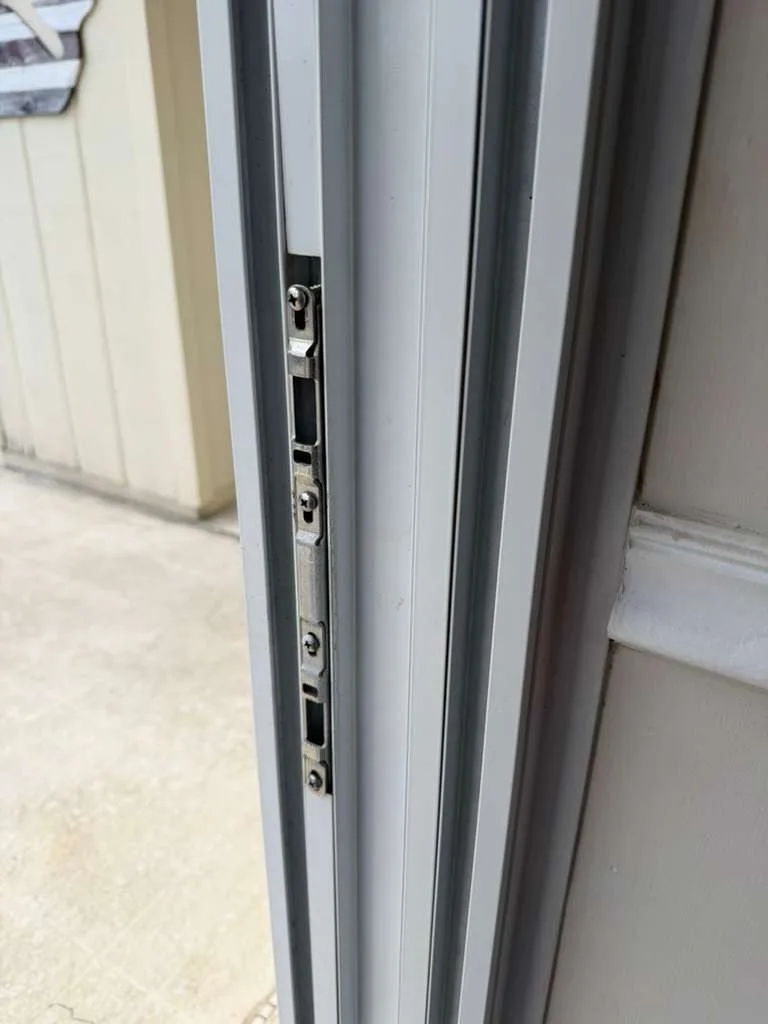
Impact doors need bigger hardware
Impact sliding doors are heavier than standard doors because of the laminated glass. That means heavier-duty rollers, stronger tracks, and more substantial lock mechanisms. The extra weight also means these doors need professional installation and should be serviced by techs who know the difference.